6/26- My Choice from "Rethinking Popular Culture and Media"
Question: Write about your chapter on your blog in a way that will help teach it to the rest of us who have not read it. Include major argument (thesis) and any supporting examples the author uses to explain his or her point.
I chose to read The Politics of Children's Literature by Herbert Kohl (pg.81-88). Kohl spends the chapter trying to highlight that children's literature that focusing on telling the stories of an individual do not tell the entire truth. There is underlying stories, people, and conflicts that lead up and build the story that is told in the stories kids read. Kohl chooses to focus on the stories of cultural icons and how they focus on the surface level story because deeper details "are usually considered too sensitive to be dealt with directly in the elementary school classroom" (p.81). Children's books are vehicles to relay information, but only tell one story because that is all kids are believed to be able to bare/handle. Kohl gives insight on how to flip the stories we know so they hold more weight and tell more truth. Kohl's thesis reminds a the Ted Talk by Chimamanda Ngozi Adichie about how everyone comes from multiple stories, not just one single story that is typically told.
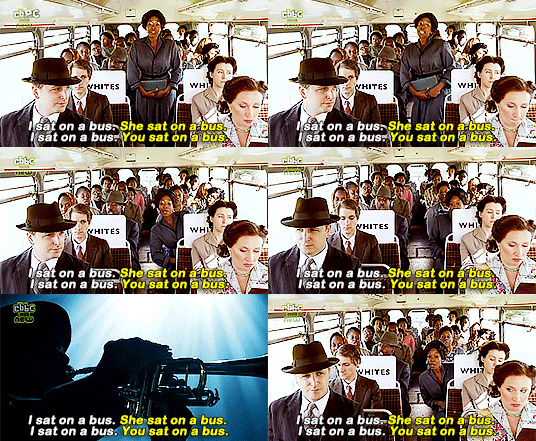
Kohl's main focus is on Rosa Parks and her story is limited to a poor woman who stood up for cultural rights by not moving from a bus seat. She is more than the truth that is told in the version entitled "Rosa Parks and the Montgomery Bus Boycott". Kohl highlights the details in this text (included in the chapter) and then proceeds to pinpoint the details that are not the true Rosa Parks. I think the most influential point Kohl makes is in the details of Rosa Parks' arrest and the events that followed it. He quotes
"The boycott was an event waiting to take place, and that is why it could be mobilized
over a single weekend. Parks arrest brought it about because she was part of the African
American leadership in Montgomery and was trusted not to cave in under the pressure
not the least of which would be threats to
her life" (p.87).
Rosa Parks is known as a woman who started a movement. However, the movement was already in motion years before Parks acted on her beliefs and was arrested. Her act and arrest triggered the movement into action. Her status within an activist group was the part of the reason why she was arrested to begin with, Kohl argues. The point is, Rosa Parks is much more than the identity that books give her. No one is too young, naive, or argumentative to hear and accept someone's full story.
Kohl is trying to get us readers to understand that children can handle all of the truth, and most likely grow and learn from knowing it. As an educator, I think it is my opportunity and responsibility to "retitle the story" (p.88) and inform my students, no matter their age, on all of the details that contribute to an entire story. Doing this is important, especially when stories are about culture, media, and historical/current events. In flipping the title, you are unlocking ways to completely flip the learning in your classroom.

When Kohl says children's book "only tell[s] one story because that is all kids are believed to be able to bare/handle." It also reminded me of the connection that you made! It also made my mind jump to the thought of the TEDxTalk "The danger of a single story." Your interpretation of this chapter makes me really want to read it. I feel that like what we talked about in class, it is not so much of believing students cannot handle truth, it is just how we share this information with them. Thanks for sharing Tori!
ReplyDeleteHi Tori, I am interested in the chapter that you read, specifically that we as educators need to normalize sharing the "full story" to our students. I think that the idea that they are unable to "handle" certain pieces of information is a mind frame that needs to be moved past from! I Also love how you included the Ted talk in your blog.
ReplyDeleteTori, I agree with you when you say it's our responsibility as educators to "retitle the story" and provide all the facts. The chapter I chose also talked about why it's important for students to recognize how power plays a role in who gets to tell what stories, and why, and why we only know certain versions over others. Kids can handle the truth! In fact, they want to.
ReplyDeleteGreat blog post Tori, I completely agree with you. Thanks for sharing!
ReplyDeleteThis article relates the one I read on the American Girl doll brand and how the historical fiction stories that come with the dolls are watered down and told through a white frame of reference. If we aren't telling children the whole truth they will grow up with this flawed version of important events in our history.
ReplyDelete