Be the Change...A Narrative
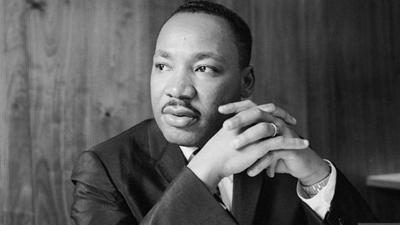
"We must accept finite disappointment but never lose infinite hope"
-Martin Luther King Jr.
MLK... what a man. What a dreamer. An inspiration. To stand up and state that there is an understanding of failure as a constant and inevitable is a strong statement to make. Sometimes I say it in my head, but never really out loud. This quote sparkles upon my identity as a teacher. It sparkles upon the narrative I am currently writing, and is still unwritten.
As a teacher who is just starting out in their career, I feel scared. Yes there is excitement and wonder and feelings of motivation too. But fear seems to be a stronger emotion sometimes. My fear does not come from lack of experience. I've had long-term positions in Cranston, RI. I worked as a co-teacher this past year and pulled out groups for mini-lessons. Teaching littles in elementary is such amazing work that makes my heart grow five sizes bigger everyday. I have a taste of what teaching can be. So where does the fear come from?
I feel the constant need to teach perfect lessons, stay within a mandated timeline, and bring success to every student I teach. Having such a high hope for my teaching typically leaves me feeling disappointed in myself. I would find myself reading articles about coping with emotions, and analyzing my teaching practice. I guess it is the fear of disappoint that puts me in this mindset. Now, don't think that I am this sad, depressed person who sits in bed and eats their feelings in ice cream. I typically only eat half the pint and then remind myself to reflect. It is within the reflection after disappointment that brings the hope back to me. Kind of like Michael Wesch's son and his love for trying and trying again after he falls down. There should never be a fear of giving up the hope that you will get it right. "Failure is not a problem". This idea brings the hope back to my "why" What is my why?
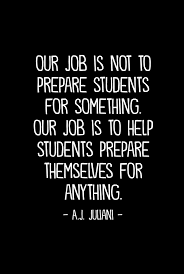 My "why" for teaching revolves around all the tiny hearts and tiny brains that walk into my classroom. I believe that a classroom is a home away from home. I believe it is a place where students can fully unlock their potential and talents and realize that they are capable. I believe that students need to know that what they learn is accessible, applicable. I believe that learning takes time and that it has greater purpose than just one lesson. Failure is not the problem... my fixed mindset that I am not doing my best for my kids is the problem. I need to really turn my focus onto the success of learning in my classroom, and what it can be.
There is one instance from this past school year that I feel struck me with all the feelings of finite disappointment that MLK references in the quote above. Whenever I sent my students off to work on writing, or read with me in a small group, I saw a struggle in finding the sounds to put together the words. In conferencing with my students and giving feedback, I found that many students were struggling with the phonemic awareness needed to dive into reading and writing independently. I had to step back, and critically analyze what the heck is going on with the phonics curriculum. Is it me? Is it the kids? Is it their connection to the curriculum. Bingo!

Thinking back to last year, I had an unconventional one. I started the year in kindergarten where I was the laying down the foundation of their phonics development. I worked in a school on the West side of Cranston with a primarily white population. I had zero emergent bilinguals The students came from well-off families and loved learning. After February vacation, I got moved to a different school, because apparently that's allowed. I am now on the East side in a fourth grade classroom with 15 ESL students in one classroom. What is the comparison I am trying to make? The fact is that there was no comparison. A curriculum that is suited for some, was being taught to all. There are even studies proving that Fundations has success in the classroom. My students on the West side, caught on quickly and were putting their phonemic awareness into practice a few months into school. My students on the East side, who are older and do not review phonics regularly anymore, struggle to write complete sentences and read at a second grade level. Why? Because some can't recall what letters come together to make a long "a" sound in the middle of a word.

The delivery and the resources that came along to teach this curriculum are, how do I want to put this, NOT accessible. Yeah, the kids remembered a picture that goes with a certain sound. Yeah they could drill sounds with flashcards. But it wasn't pushing them forward. The kids had tools to move forward, but couldn't access them when the time came. Ken Robinson's work really sparked a realization on what my next steps could be with this struggle. Classroom culture should be creative and should provide access to individuality. How can I as an educator make phonics accessible to those who are hands-on learners? How can I make phonics accessible to those who love music and art? How can I make phonics accessible to emergent bilinguals who are learning English while completely work in "English-only" classrooms? It is time for a change....project!
This coming year, I am moving on to a full-time 2nd grade teaching position (WOO-HOO!). My goal for change is to find an alternative platform(s) to help kids move away from the learning “safety net” that curriculum practice has given them and conditioned them to use. What is present is not working. Since many aspects of the classroom are not working, students are leaving with a feeling in their hearts that the classroom is not for them. The classroom feels empty to them because it is not a place that understands them and what they need. It's kind of relatable to what Danah Boyd talks about in relation to technology use in younger generations. "Curiosity may lead many teens to develop meaningful knowledge about social media, but there is huge variation in knowledge and experience"(Boyd, p.176). If we make an assumption that the students already know a concept, they will get lost. And if we assume they have experience because of their knowledge about certain things, then they will never get the experience they need and deserve. As far as my phonics project, I feel as though students have the knowledge of phonics, but when it comes to the experience and using their knowledge in it, it doesn't translate.
Here is the change I am proposing for my next school year. I am going to dive in head first with two new tools in my tool bag! I do see myself as pretty tech-savvy, or as a techno-traditionalist. I am hoping to cross over into the category of a techno-constructivist. Simply, I want to be innovate in my use of technology. The first tool I went out searching for was something geared towards helping my emergent bilinguals hear the letter sounds, and to integrate an aspect of technology for digital-obsessed students, who also need some more practice with phonics. I came across an application called Word Wizard. The application cost $4.99 in in the App Store, but offers so much to students. It provides students with access to technology, it reads letter sounds, letter blends, and full word to students. I played with this application for a while and I think it will be pretty easy for my 2nd graders to maneuver. The application includes a moveable alphabet, word practice boards, letter scramble, and spelling quizzes. There are lists of words programmed into each game/setting, or the teacher can make their own list for the students to practice with. I believe that by using this application 1-2 days a week in my classroom, either in whole group instruction, or in a center during Station Rotation, students will begin to pick up on letter sounds and patterns because they will hear them frequently, but also get to hear them through play. The voicing aspect of this application will be helpful for my bilingual students as well. They could potentially even use this app during writing time if needed as a guide for sounding out words. Eventually they would not need that type of differentiation. Once they have more practice with English phonics, they can move to working independently.
My plan for Lively Letters is to use it as reinforcement for the Fundations curriculum that is required by my school. I will integrate the interactive reading stories, as well as the sight word trick cards into my center rotation. I hope to do so about 3-4 days a week. I plan to teach the students the hand cues during whole group instruction, and then utilize the interactive stories from Lively Letters in my Word Work or Collaboration center. I can also use the sight word tricks and drill cards in the centers so students can build their meaning through the pictures associated with each sight word. As I learn more about Lively Letters, I want to see how the students respond to this study of phonics compared to how they have been learning it. Will they simply just learn this too? Or will they learn the meaning of phonics through these new methods?
Integrating this application into the change will give students opportunity to play with letters and their phonemic awareness, rather than just drilling it repetitively. Repetition and memorization is not helping some students because kids are learning what a concept is, not what it means. Technology applications to phonics are just one good way to switch it up. Doctor Lesley Bogad informed me of a phonics curriculum that her son is currently using called Lively Letters. This curriculum is formed around the idea that children need phonemic awareness to progress into phonics, and then push into its application to reading. On the web, there are many sources to guide educators through the process and techniques that Lively Letters incorporates into their program. The aspects I like about this curriculum are the multi-sensory implication that match up with each letter, as well as the interactive stories that revolve around certain letter patterns. Multi-sensory techniques are very impactful in early childhood learning. I think the strategies and tools that this curriculum brings could benefit many of my students. There are picture cues, letter stories, as well as hand cues to helps students connect the letter to its sound, rather than just telling them to memorize it. There is also an App for Lively Letters. It does cost $29.99 to purchase, so I have yet to explore it. If I find that Lively Letters strategies are becoming successful for my students, I may invest in the App.
Before this course with Doctor Bogad, I'm not sure if I would have advocated for change so quickly, or in this manner. I think as a first year teacher, it is typical to feel like you can't push back. It is better to blend in and not stir the pot because you might lose your job. Who cares about you, you're new and can be replaced. This course gave me the tools and methods to become brave. There is more than one way of doing things. There is also more than one tool that is needed when working with kids that are diverse in culture, learning style, and simply just live in a time where the world is seen through alternative avenues. I think the biggest takeaway from this class is that you are never too small or unimportant to start change. Some may see me as new and inexperienced as a professional. But who cares. I need to create change for myself and the ones who are going to be around to see it and be impacted by it; my students. That is why I find myself always going back to that MLK quote. There is always going to be disappointment. But what matters most is that that disappointment, is always going to be followed by hope that things can change. Now I know I can be the one to change them.
Pecha Kucha:
https://drive.google.com/file/d/1pxOzlFMJOP2t5DNipnAwLIkAzmS5X-d6/view
Project Action Plan: https://docs.google.com/document/d/1gkoyWQAMeOn96xgU3kf2UXEImrRXBLvG-lwloa3S8u8/edit?usp=sharing
My Rubric: https://docs.google.com/document/d/e/2PACX-1vSwyLoLvH-bjRbg5FQoF6yjAqGTETv45grMVrvB8MRdE199iXnBH8jU2yP7aZofQQztd8qOOaUQlzH3/pub
-Martin Luther King Jr.
MLK... what a man. What a dreamer. An inspiration. To stand up and state that there is an understanding of failure as a constant and inevitable is a strong statement to make. Sometimes I say it in my head, but never really out loud. This quote sparkles upon my identity as a teacher. It sparkles upon the narrative I am currently writing, and is still unwritten.
As a teacher who is just starting out in their career, I feel scared. Yes there is excitement and wonder and feelings of motivation too. But fear seems to be a stronger emotion sometimes. My fear does not come from lack of experience. I've had long-term positions in Cranston, RI. I worked as a co-teacher this past year and pulled out groups for mini-lessons. Teaching littles in elementary is such amazing work that makes my heart grow five sizes bigger everyday. I have a taste of what teaching can be. So where does the fear come from?
I feel the constant need to teach perfect lessons, stay within a mandated timeline, and bring success to every student I teach. Having such a high hope for my teaching typically leaves me feeling disappointed in myself. I would find myself reading articles about coping with emotions, and analyzing my teaching practice. I guess it is the fear of disappoint that puts me in this mindset. Now, don't think that I am this sad, depressed person who sits in bed and eats their feelings in ice cream. I typically only eat half the pint and then remind myself to reflect. It is within the reflection after disappointment that brings the hope back to me. Kind of like Michael Wesch's son and his love for trying and trying again after he falls down. There should never be a fear of giving up the hope that you will get it right. "Failure is not a problem". This idea brings the hope back to my "why" What is my why?
There is one instance from this past school year that I feel struck me with all the feelings of finite disappointment that MLK references in the quote above. Whenever I sent my students off to work on writing, or read with me in a small group, I saw a struggle in finding the sounds to put together the words. In conferencing with my students and giving feedback, I found that many students were struggling with the phonemic awareness needed to dive into reading and writing independently. I had to step back, and critically analyze what the heck is going on with the phonics curriculum. Is it me? Is it the kids? Is it their connection to the curriculum. Bingo!
Thinking back to last year, I had an unconventional one. I started the year in kindergarten where I was the laying down the foundation of their phonics development. I worked in a school on the West side of Cranston with a primarily white population. I had zero emergent bilinguals The students came from well-off families and loved learning. After February vacation, I got moved to a different school, because apparently that's allowed. I am now on the East side in a fourth grade classroom with 15 ESL students in one classroom. What is the comparison I am trying to make? The fact is that there was no comparison. A curriculum that is suited for some, was being taught to all. There are even studies proving that Fundations has success in the classroom. My students on the West side, caught on quickly and were putting their phonemic awareness into practice a few months into school. My students on the East side, who are older and do not review phonics regularly anymore, struggle to write complete sentences and read at a second grade level. Why? Because some can't recall what letters come together to make a long "a" sound in the middle of a word.
The delivery and the resources that came along to teach this curriculum are, how do I want to put this, NOT accessible. Yeah, the kids remembered a picture that goes with a certain sound. Yeah they could drill sounds with flashcards. But it wasn't pushing them forward. The kids had tools to move forward, but couldn't access them when the time came. Ken Robinson's work really sparked a realization on what my next steps could be with this struggle. Classroom culture should be creative and should provide access to individuality. How can I as an educator make phonics accessible to those who are hands-on learners? How can I make phonics accessible to those who love music and art? How can I make phonics accessible to emergent bilinguals who are learning English while completely work in "English-only" classrooms? It is time for a change....project!
This coming year, I am moving on to a full-time 2nd grade teaching position (WOO-HOO!). My goal for change is to find an alternative platform(s) to help kids move away from the learning “safety net” that curriculum practice has given them and conditioned them to use. What is present is not working. Since many aspects of the classroom are not working, students are leaving with a feeling in their hearts that the classroom is not for them. The classroom feels empty to them because it is not a place that understands them and what they need. It's kind of relatable to what Danah Boyd talks about in relation to technology use in younger generations. "Curiosity may lead many teens to develop meaningful knowledge about social media, but there is huge variation in knowledge and experience"(Boyd, p.176). If we make an assumption that the students already know a concept, they will get lost. And if we assume they have experience because of their knowledge about certain things, then they will never get the experience they need and deserve. As far as my phonics project, I feel as though students have the knowledge of phonics, but when it comes to the experience and using their knowledge in it, it doesn't translate.
Here is the change I am proposing for my next school year. I am going to dive in head first with two new tools in my tool bag! I do see myself as pretty tech-savvy, or as a techno-traditionalist. I am hoping to cross over into the category of a techno-constructivist. Simply, I want to be innovate in my use of technology. The first tool I went out searching for was something geared towards helping my emergent bilinguals hear the letter sounds, and to integrate an aspect of technology for digital-obsessed students, who also need some more practice with phonics. I came across an application called Word Wizard. The application cost $4.99 in in the App Store, but offers so much to students. It provides students with access to technology, it reads letter sounds, letter blends, and full word to students. I played with this application for a while and I think it will be pretty easy for my 2nd graders to maneuver. The application includes a moveable alphabet, word practice boards, letter scramble, and spelling quizzes. There are lists of words programmed into each game/setting, or the teacher can make their own list for the students to practice with. I believe that by using this application 1-2 days a week in my classroom, either in whole group instruction, or in a center during Station Rotation, students will begin to pick up on letter sounds and patterns because they will hear them frequently, but also get to hear them through play. The voicing aspect of this application will be helpful for my bilingual students as well. They could potentially even use this app during writing time if needed as a guide for sounding out words. Eventually they would not need that type of differentiation. Once they have more practice with English phonics, they can move to working independently.
My plan for Lively Letters is to use it as reinforcement for the Fundations curriculum that is required by my school. I will integrate the interactive reading stories, as well as the sight word trick cards into my center rotation. I hope to do so about 3-4 days a week. I plan to teach the students the hand cues during whole group instruction, and then utilize the interactive stories from Lively Letters in my Word Work or Collaboration center. I can also use the sight word tricks and drill cards in the centers so students can build their meaning through the pictures associated with each sight word. As I learn more about Lively Letters, I want to see how the students respond to this study of phonics compared to how they have been learning it. Will they simply just learn this too? Or will they learn the meaning of phonics through these new methods?
Integrating this application into the change will give students opportunity to play with letters and their phonemic awareness, rather than just drilling it repetitively. Repetition and memorization is not helping some students because kids are learning what a concept is, not what it means. Technology applications to phonics are just one good way to switch it up. Doctor Lesley Bogad informed me of a phonics curriculum that her son is currently using called Lively Letters. This curriculum is formed around the idea that children need phonemic awareness to progress into phonics, and then push into its application to reading. On the web, there are many sources to guide educators through the process and techniques that Lively Letters incorporates into their program. The aspects I like about this curriculum are the multi-sensory implication that match up with each letter, as well as the interactive stories that revolve around certain letter patterns. Multi-sensory techniques are very impactful in early childhood learning. I think the strategies and tools that this curriculum brings could benefit many of my students. There are picture cues, letter stories, as well as hand cues to helps students connect the letter to its sound, rather than just telling them to memorize it. There is also an App for Lively Letters. It does cost $29.99 to purchase, so I have yet to explore it. If I find that Lively Letters strategies are becoming successful for my students, I may invest in the App.
Before this course with Doctor Bogad, I'm not sure if I would have advocated for change so quickly, or in this manner. I think as a first year teacher, it is typical to feel like you can't push back. It is better to blend in and not stir the pot because you might lose your job. Who cares about you, you're new and can be replaced. This course gave me the tools and methods to become brave. There is more than one way of doing things. There is also more than one tool that is needed when working with kids that are diverse in culture, learning style, and simply just live in a time where the world is seen through alternative avenues. I think the biggest takeaway from this class is that you are never too small or unimportant to start change. Some may see me as new and inexperienced as a professional. But who cares. I need to create change for myself and the ones who are going to be around to see it and be impacted by it; my students. That is why I find myself always going back to that MLK quote. There is always going to be disappointment. But what matters most is that that disappointment, is always going to be followed by hope that things can change. Now I know I can be the one to change them.
Pecha Kucha:
https://drive.google.com/file/d/1pxOzlFMJOP2t5DNipnAwLIkAzmS5X-d6/view
Project Action Plan: https://docs.google.com/document/d/1gkoyWQAMeOn96xgU3kf2UXEImrRXBLvG-lwloa3S8u8/edit?usp=sharing
My Rubric: https://docs.google.com/document/d/e/2PACX-1vSwyLoLvH-bjRbg5FQoF6yjAqGTETv45grMVrvB8MRdE199iXnBH8jU2yP7aZofQQztd8qOOaUQlzH3/pub


Comments
Post a Comment